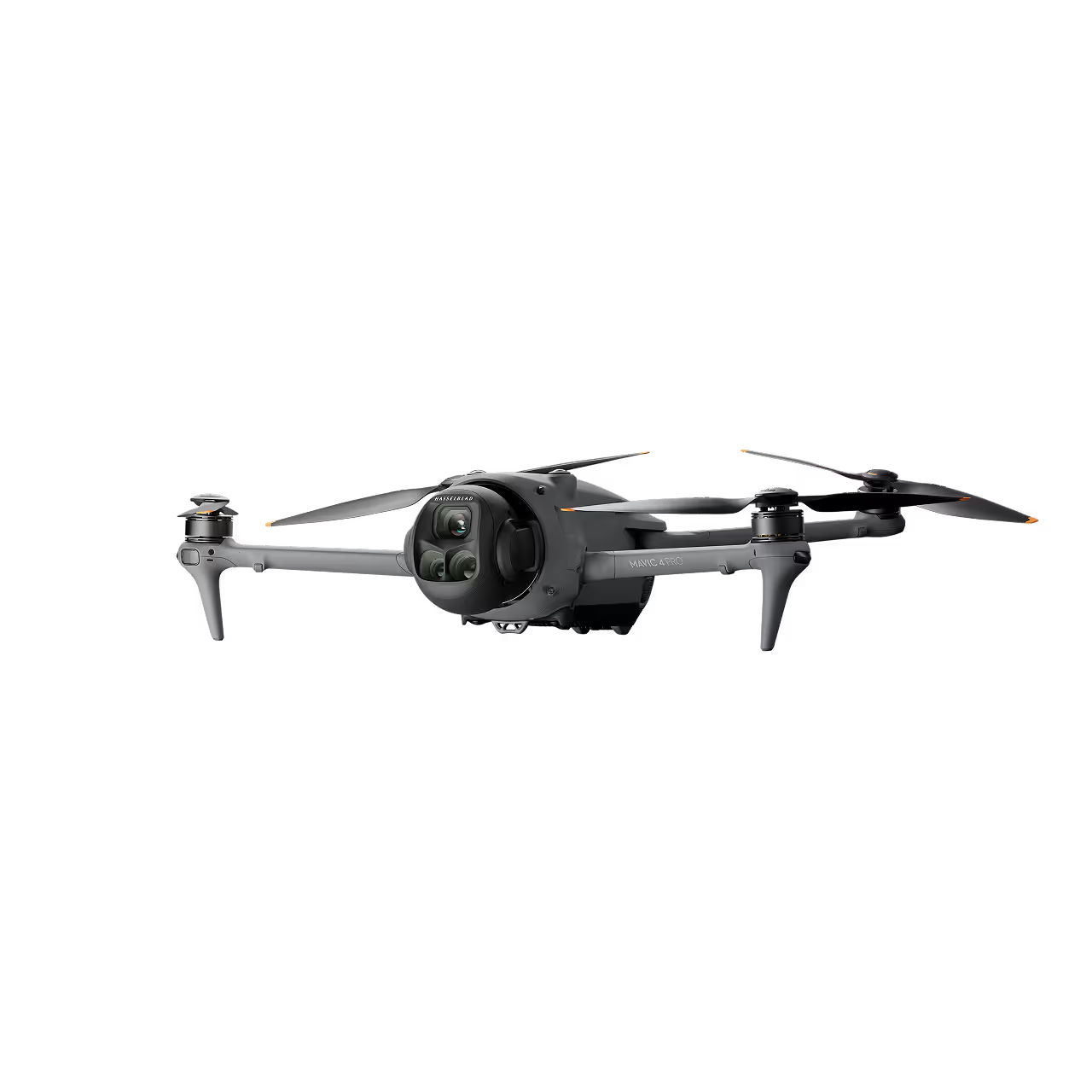
DJI Mavic 4 Pro: Everything you need to know!

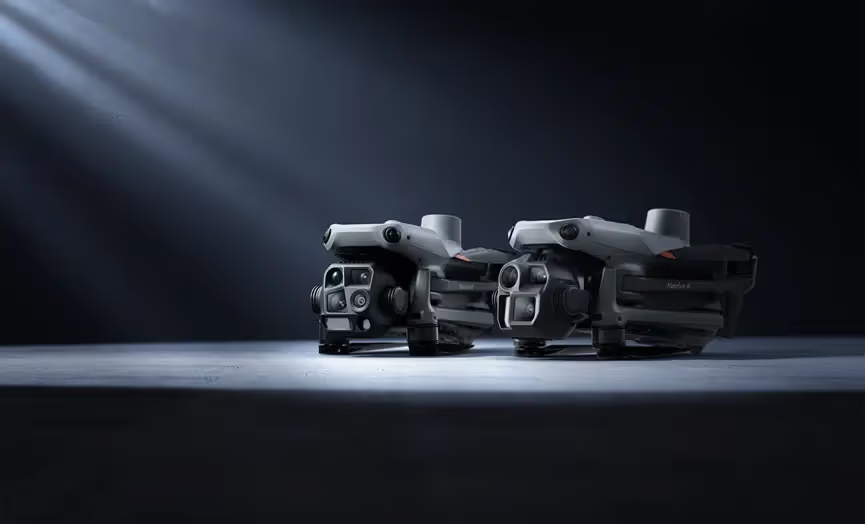
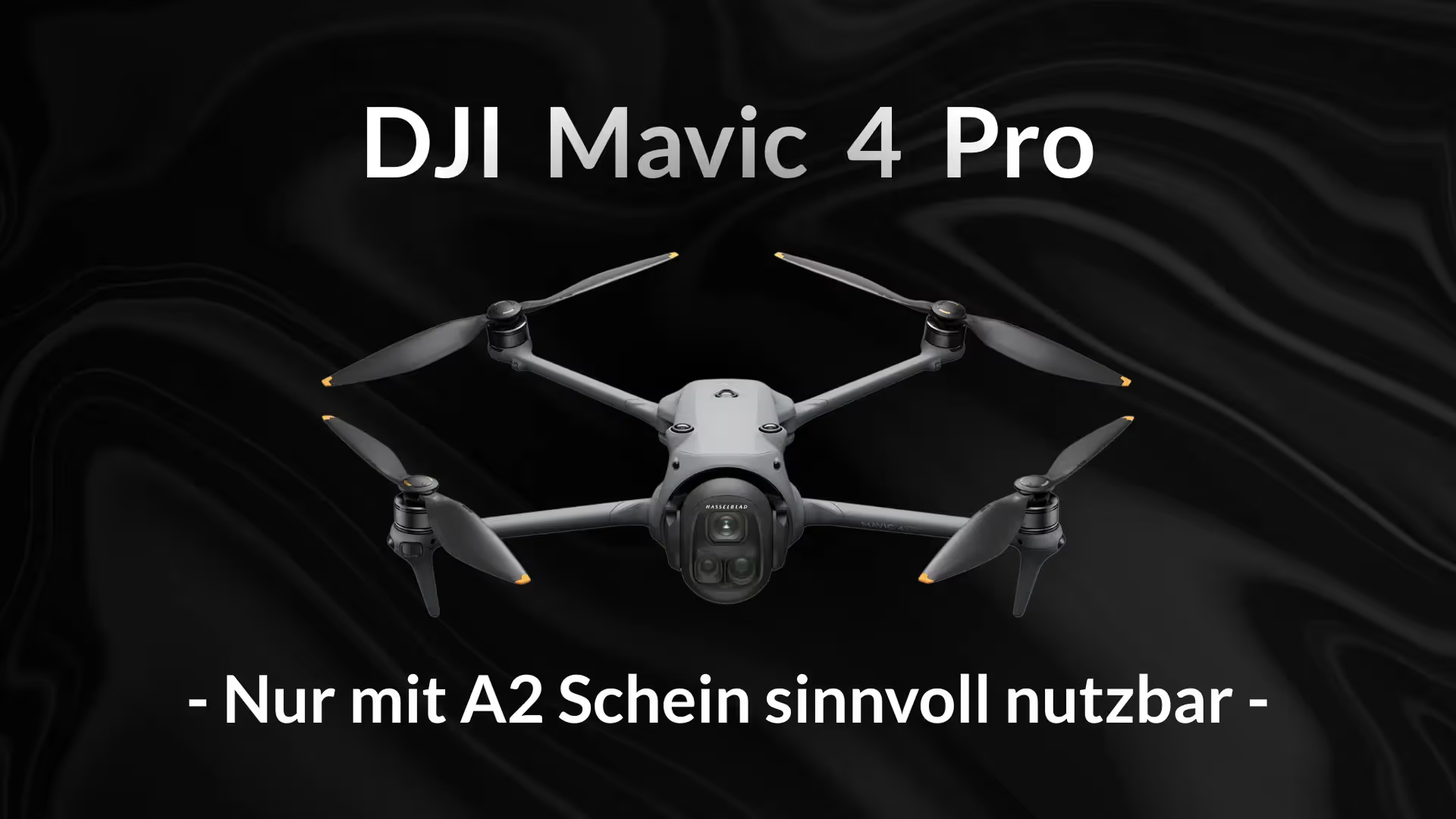
The DJI Mavic 4 Pro is currently one of the most advanced drone models on the market — with a triple camera, a revolutionary gimbal and tremendous image quality. But: Anyone who wants to use this drone legally and sensibly in Germany needs more than just technical understanding — the A2 drone license It's a duty.

Technical details

DJI Mavic 4 Pro

  • Aircraft:

    DJI Mavic 4 Pro

  • Starting weight:

    1490g

  • dimensions:

  • Maximum climb rate:

  • Maximum descent rate:

  • Maximum horizontal speed:

DJI Mavic 4 Pro: C2-klassifiziert und damit A2-Pflichtig

Mit einem Gewicht von ca. 1060 g und einer offiziellen C2-Klassifizierung fällt die Mavic 4 Pro in die offene Kategorie A2 nach europäischem Drohnenrecht. Das bedeutet konkret:

  • Du darfst nicht einfach in Wohngebieten oder in unmittelbarer Nähe von Menschen fliegen.

  • Mit A2-Zeugnis musst du normalerweise 50 m Abstand zu unbeteiligten Personen halten – dieser Abstand kann jedoch auf 5 m reduziert werden, wenn du den Langsamflugmodus aktivierst. (max. 3 m/s)

  • Um die DJI Mavic 4 Pro sinnvoll nutzen zu können – etwa in der Nähe von Menschen oder in Wohngebieten – brauchst du den A2-Drohnenführerschein. Zwar ist theoretisch auch ein Betrieb im A3-Szenario möglich (mit 150 m Abstand zu Menschen und Gebäuden), dieser ist in der Praxis aber stark eingeschränkt.

Ohne diesen Nachweis riskierst du Bußgelder und darfst viele Gebiete und Flugszenarien gar nicht erst nutzen.

Unser Tipp:

Mach deinen A2-Drohnenführerschein bequem online bei der Copteruni. In wenigen Stunden bist du bereit, die Mavic 4 Pro wirklich auszureizen – legal, sicher und professionell.

Technische Highlights: Was kann die DJI Mavic 4 Pro?

  • 100 MP Hasselblad-Kamera mit 4/3” Sensor

    Die Mavic 4 Pro ist ein wahres Kraftpaket für Luftbild-Enthusiasten und Profis. Die wichtigsten technischen Features:

    • Unterstützt 6K/60fps HDR-Video

    • Variable Blende (f/2.0 – f/11)

    • Hasselblad Natural Color Solution für exakte Farbdarstellung

  • Zwei zusätzliche Telekameras

    • 48 MP bei 70 mm Brennweite (1/1,3”-Sensor)

    • Variable Blende (f/2.0 – f/11)

    • Ideal für Porträts, Objektverfolgung und extreme Zooms

  • Infinity-Gimbal mit 360°-Rotation

    • Völlig neue Aufnahmewinkel (auch 70° nach oben!)

    • Reale Hochkantaufnahmen mit Gimbal-Drehung (keine Crop-Videos)

  • Omnidirektionale Hinderniserkennung bei Nacht

    • Funktioniert bei nur 0,1 Lux

    • LiDAR-Unterstützung für extrem präzises Ausweichen

    • ActiveTrack 360° für dynamische Objektverfolgung bei Dunkelheit

  • Bis zu 51 Minuten Flugzeit & 30 km Reichweite

    • Windresistenz bis 12 m/s

    • DJI O4+ Übertragung mit 10-Bit HDR-Videosignal

    • QuickTransfer & 512 GB interner Speicher (Creator Combo)

Wer sollte zur DJI Mavic 4 Pro greifen?

  • Für Freizeitpiloten:

    • Beeindruckende automatische Flugmodi

    • Intuitive Steuerung mit DJI RC 2

    • Ideal für Reiseaufnahmen, Content Creation & Social Media

  • Für Profis:

    • Dreifachkamera für maximale Flexibilität

    • 10-Bit-Farbprofile, ND-Filter, Hyperlapse & Wegpunkte

    • Unverzichtbar für Immobilien, Filmproduktionen, Inspektionen & Marketing

Fazit: Beeindruckende Technik – aber mit Pflichten verbunden

Die DJI Mavic 4 Pro ist ein technologischer Meilenstein. Doch sie kommt mit Verantwortung: Ohne A2-Führerschein ist ihre Nutzung stark eingeschränkt – gerade in Städten, bei Personenaufnahmen oder bei professionellen Einsätzen. Wer sie wirklich sinnvoll einsetzen will, braucht die passende Lizenz.

The 1:1 rule

Well, it's really easy. The 1:1 rule states that the drone's flight altitude must not be greater than the distance from uninvolved persons. This means that if you fly 50 m high, you must also maintain a minimum distance of 50 m from the uninvolved persons. If you only fly 20 m high, a distance of... 20 m, that's right. 😉

Well, you see, it's really easy.

But also equally important, because the 1:1 rule is used for the so-called soil risk, In other words, to minimize the risk that your drone poses to objects on the ground.

How does that work?

Imagine the following scenario: You're flying through the area with your drone and suddenly a motor fails. With most drones, this means that the drone will definitely crash.

But now the drone will not fall vertically like a rock to the ground in place, but because it still has a certain horizontal speed, it will travel a certain distance until it hits the ground. This route depends primarily on the altitude, the mass of the drone and, of course, your speed.

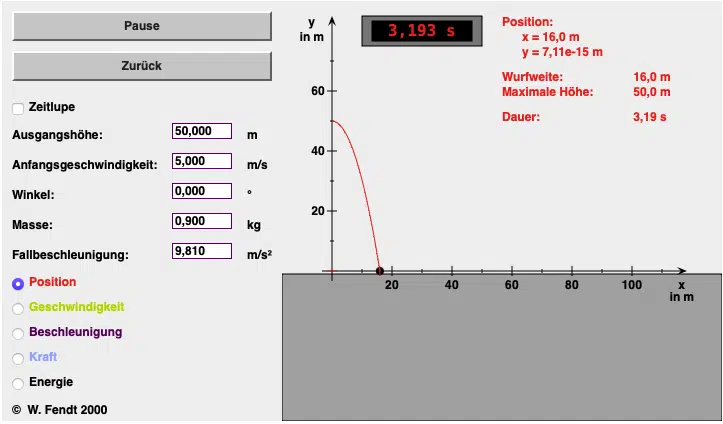
Here is an example of a drone that flies at an altitude of 50 m at a speed of 5 m/s and weighs 900 g (like most Mavics):

Simulation Flugbahn einer Drohne

Simulation by Walter Fendt.

Here you can see that the distance traveled after the engine failure is still 16m and it takes about 3s until the drone hits.

By complying with the 1:1 rule, we therefore still have enough safety buffers left over here so as not to endanger uninvolved persons. More specifically, it is 50m - 16m = 34m.

If you repeat the experiment at the maximum speed of 21 m/s, the buffer becomes significantly smaller or is no longer available at all. The distance traveled after engine failure is then 67m! 😳

For example, this is one reason why you have to activate slow flight mode (max. 3 m/s) in the A2 category as soon as you fly closer than 30 m to uninvolved people.

Well, now you know what the 1:1 rule is and why they introduced it.

But now back to the actual topic.

How can I put the 1:1 rule into practice?

We use very simple trigonometric relationships. Put more simply: simple principles of triangles 😉 and a feature that most drones with cameras have out of the box.

And because I don't want to burden you with mathematical formulas now, I'll explain to you directly how it works in practice:

If you want to check whether you are following the 1:1 rule, you can do the following:

  • Align your camera so that you have the innocent person or other critical infrastructure in the picture.

  • Swivel your camera down to a 45° angle.

  • Check whether the person is in the top or bottom half of the screen

    • Top half: ✅ All good, you comply with the 1:1 rule

    • lower half: 🚫 You must immediately reduce your height or increase the distance

It's as simple as that, but I can already see that you might have a small question mark in your head. Especially on the 2nd point, I think. Where do you get the camera's angle of inclination? So here are a few additional words about this.

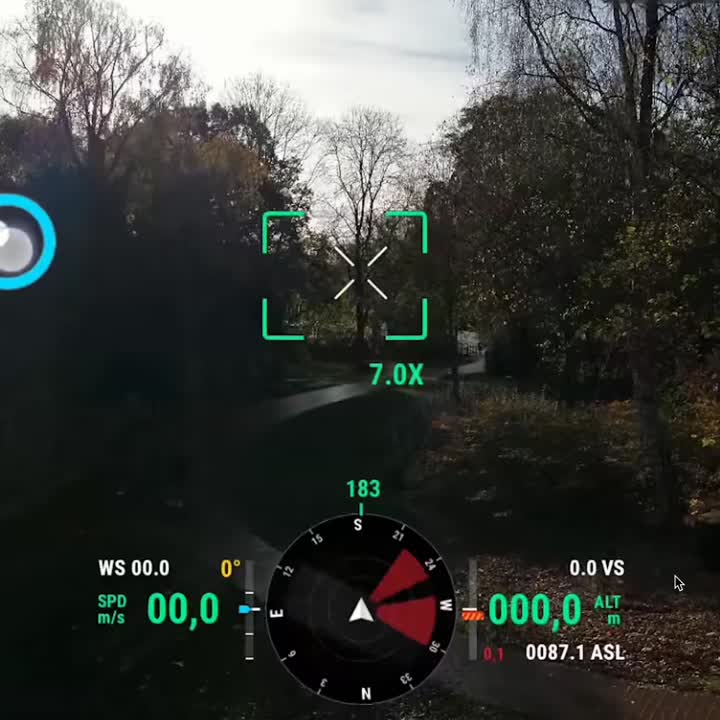
With most DJI drones, you'll see a small scale on the screen on the right side.

This is usually quite transparent as long as you don't pan the camera up or down, but becomes opaque as soon as you pan the camera.

On this scale, you can read the camera angle very well. With some models, you even have markers for the 45° position.

You usually adjust the angle of DJI drones using a small wheel on the remote control.

Okay, if you're not interested in why this is the case, then you should skip the next section and Read more here.

The math background

As mentioned above, simple trigonometric relationships are the reason why you can do this so easily.

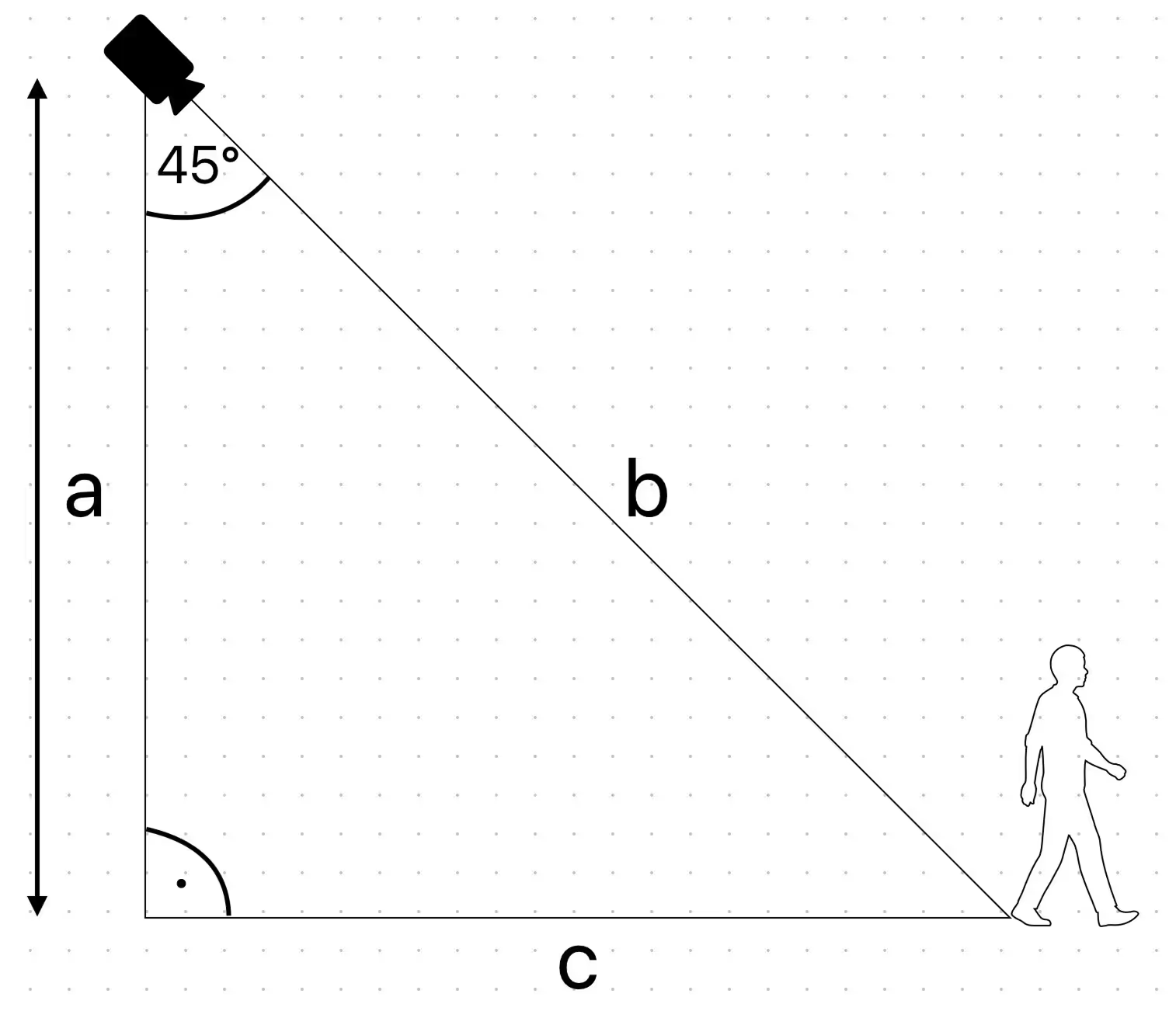
Perhaps you still know from math lessons at school that the sum of all angles in a triangle must be 180°. In our example, we now also have the special feature that it is a right, isosceles triangle:

Side a is also the height of the drone. The camera shown is tilted downwards at a 45° angle. Side c is the horizontal distance between the drone and the uninvolved person. The right angle is between sides a and c.

How does that work?

Imagine the following scenario: You're flying through the area with your drone and suddenly a motor fails. With most drones, this means that the drone will definitely crash.

In this right triangle, a = c applies, i.e. The height of the drone above ground is equal to the distance from the uninvolved person.

Rechtwinkliges Dreieck mit den Seiten a, b und c, einem 45-Grad-Winkel und einer Kamera in der linken oberen Ecke, rechts geht eine Person.

Equation—Copteruni-1-1 rule.

Of course, you can only do this on flat terrain. If the whole thing happens in descending or ascending terrain, it is no longer as accurate.

If you not only sleep in the forest and have a bushy tail, but are also a fox, you may have noticed another useful use case...

How to measure distances with a drone

Of course, you can also use this insight to measure distances with your drone. There are 2 ways to do this:

  1. possibility

    • Bring the object to which you want to measure the distance into your image section

    • Swivel your camera 45° down

    • Rise or fall until the object is in the center of the image

    • Read your current altitude. That is also the distance to the object ✅

  2. possibility

    • Bring the object to which you want to measure the distance in the center of the image

    • Read your current camera angle and height

    • Use our calculator or PocketCard to determine the current distance.

🟢 1:1 rule met

🔴 1:1 rule not fulfilled!
You have to adjust your flight altitude by xxx reduce.

Note:Enter at least two of the three values. The missing value is calculated automatically.

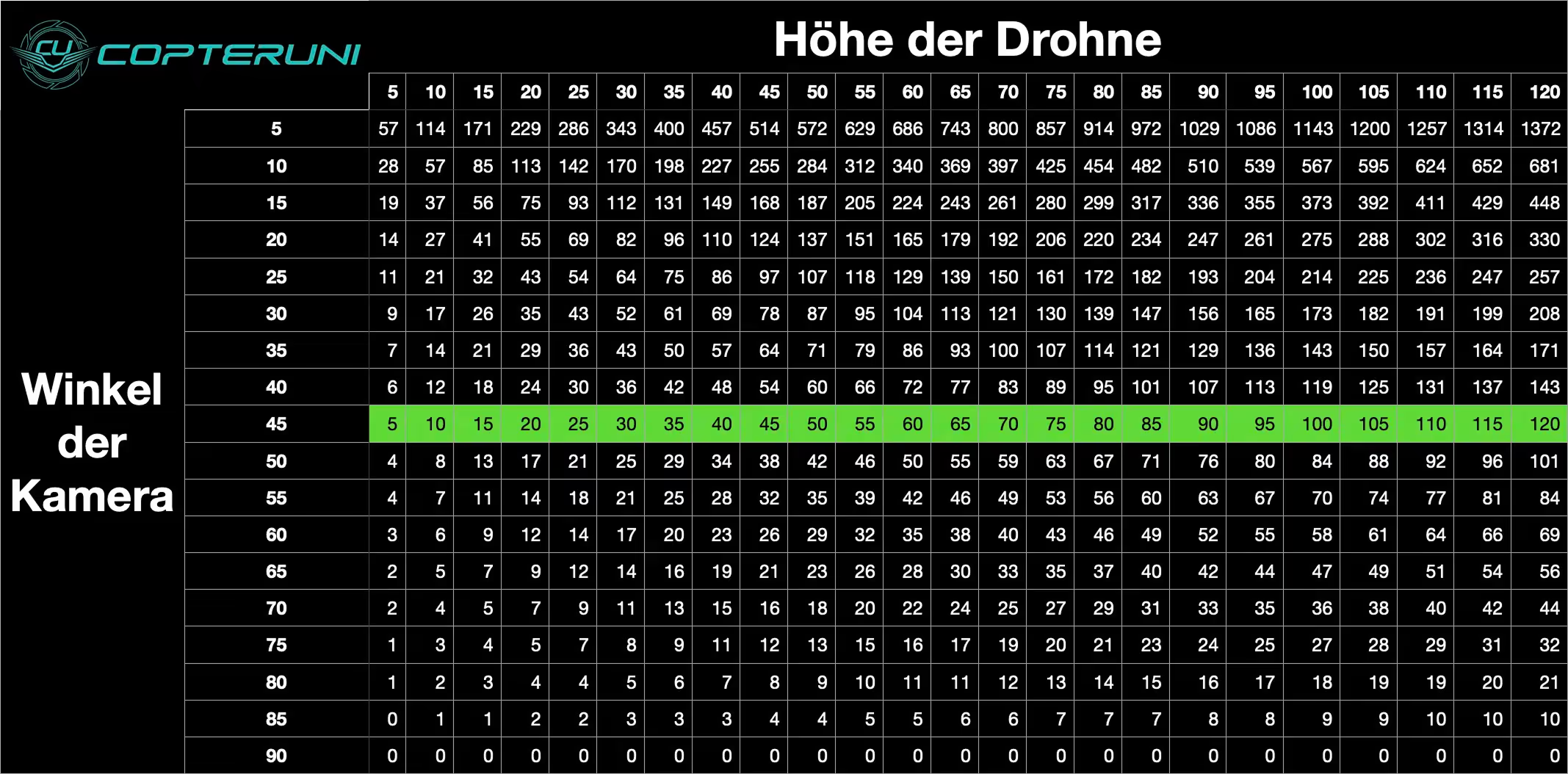
1 zu 1 Regel in einer Tabelle

1-1 rule-Copteruni

By the way, you use the PocketCard as follows:

  • Read the camera's angle of inclination and enter the 1st column with this value

  • Then look at the top of the first line and go as far to the right until you find your current height.

  • The intersection of the Tilt Angle line and the Height column is your distance from the object.

To make it more clear, here's a small example:

I am currently flying at an altitude of 70 m with my drone and my camera is tilted at 20°. If the object is now in the center of the image, I have a distance of approx. 192m from the object.

Great, isn't it?

conclusion

With these simple tips, you now know how to easily comply with the 1:1 rule without the great uncertainty of guessing. At the same time, I also showed you how you can measure distances relatively precisely with your drone.

The PocketCard helps you measure the distance to something from almost any position.

I recommend that you try the whole thing out for yourself while flying for real. Deliberately fly at different distances such as 30m, 10m, or even 5m from yourself. And you'll find that you can fly really close to innocent people in compliance with the rules.

I hope I was able to offer you real added value with this newsletter.

I would be very happy to receive your feedback and of course you can discuss this topic extensively with us on the Copteruni Campus.

Attention drone pilots! These guidelines are helpful tips based on experience, but they are not legally binding. They do not replace official drone laws, nor do they replace the existing geozones, where much is already regulated. They only serve to make it easier for us to fly and to help us fly more safely.

The solution - a distinction is made according to the infrastructure

First of all, EASA has specified that people who are not protected by vehicle covers must be seen as uninvolved third parties and that the known distances and rules therefore apply.

As a result, people within a closed vehicle cannot be seen as uninvolved third parties 👍🏻.

However, in order not to have to look at which types of vehicles are now on the road every time, EASA recommends differentiating according to the infrastructure. Namely to motorways (translated, original: highways) and other roads.

Furthermore, a distinction is made within these two sectors according to the operating category, i.e. between A 1, A 2 and A 3.

And now to the specific recommendations for motorways and other roads.

Motorways - you should keep that in mind

Here is a nice table with which you can see what applies in the respective operating category.

Motorways - you should keep that in mind

terms

A1

A2

A3

Overflight allowed?

🟢🟢🔴

Hovering (floating) allowed?

🔴🔴

Longer flights over or along the infrastructure?

🔴🔴

20m minimum height

🟢🟢

Unrestricted view of the drone at all times

🟢🟢

Drivers are not distracted by banners, flashy lights, etc.

🟢🟢

No vehicles available during the overflight

🔴🟢

🟢 = yes, or must be considered 🔴 = no, or must be ignored

note: In A3, you can't do that at all.

That applies to other roads

Here, too, we have put together a nice table for you.

That applies to other roads

terms

A1

A2

A3

Overflight allowed?

🟢🟢🟢

Hovering (floating) allowed?

🔴🔴🔴

Longer flights over or along the infrastructure?

🔴🔴🔴

20m minimum height

🟢🟢🟢

Unrestricted view of the drone at all times

🟢🟢🟢

Drivers are not distracted by banners, flashy lights, etc.

🟢🟢🟢

No vehicles available during the overflight

🟢🟢🟢

🟢 = yes, or must be considered 🔴 = no, or must be ignored

You can immediately see that there is much more to other roads, especially in the A3 category. However, there must never be uninvolved persons in vehicles nearby during the crossing.

Conclusion and an important note ⚠️

In principle, of course, you must never disturb or endanger traffic with your drone. If you operate nearby, the 1:1 rule also applies. Always watch out for innocent people in vehicles.

With these recommendations, EASA has created a nice guideline which, on the one hand, reduces the risk of a corresponding mission and at the same time also provides clear recommendations for action.

It is now up to countries to consider it within the framework of geozones.

⚠️ We have already introduced corresponding geozones in Germany. In [§21h LuftVO] It's called so nicely:

(3) Operation in the following geographical areas is permitted under the following conditions...

5. over and within a lateral distance of 100 meters from federal highways, federal waterways and railways,

a) if, in the event of an overflight of federal trunk roads or railway facilities, the operation takes place in the “special” category and the particular risks of overflying federal trunk roads or railway facilities have been sufficiently taken into account within the risk assessment in accordance with Article 11 of Implementing Regulation (EU) 2019/947,

b) if the competent authority or the operator of the facilities has expressly agreed to operate the unmanned aerial vehicle,

c) when the height of the aircraft above ground is always less than the lateral distance from the infrastructure and the lateral distance from the infrastructure is always greater than 10 meters, or

d) If, in the event of an overflight of federal waterways, the aircraft is operated at least 100 meters above ground or water, only one crossing takes the shortest route and no ships or shipping facilities, in particular locks, weirs, ship lifts and berths, are flown over

In this country, it is already clearly regulated how to Federal highways has to behave. Other roads are not yet so clearly regulated, so we recommend that you follow the good airmanship guidelines described here.

What do you think of these guidelines? Will you stick to them or do you think they are complete nonsense?

Let us know and discuss with us and other drone pilots in our exclusive forum, the Copteruni Campus

Über den Autor: Jan Evers

Jan Evers is an outstanding personal coach in the online course sector and a recognized expert in his field. With a Master of Science in Electrical Engineering, he has extensive technical knowledge. In the last 10 years, Jan has not only designed and programmed drones, but has also successfully used them in major film productions such as “Deutschland von Oben” and various Tatort episodes. As an active airline pilot, he also brings valuable professional aviation expertise. His experience as an instructor for airline pilots at a renowned flight school particularly qualifies him to convey learning content effectively and comprehensibly. Jan Evers combines a passion for drones and aviation, which makes him an excellent coach and mentor.

Any more questions?

Give us a call

Write us an email

Chat öffnen

Use our chat

Blog

The 5 most important flight principles for drone pilots

Drone flying is fascinating — but if you want to enjoy it in the long term, you should know and internalize some basic principles. They not only help you bring your own drone home safely, but also ensure safety in airspace. In this article, we summarize the central rules for safe drone flight.

1. The rear of the drone always points at you

The most important principle is: Always fly so that the rear of the drone is facing you.

This gives you a clear reference and keeps your control commands intuitive. If you lose this orientation, you can easily perform incorrect steering maneuvers — with the result that the drone flies uncontrollably into trees or other obstacles.

2. Strict separation of visual flight and monitor flight (FPV)

Another key to safe control is clear separation between visual flight and monitor flight (FPV).

If the two are mixed, the risk of your orientation getting mixed up increases. Therefore: You either control exclusively by sight or exclusively via the monitor — and the transition should always be deliberate and procedural.

3. Never fly behind you

Even though it sounds tempting — Never fly behind you. As soon as the drone flies over your position and gets behind you, your control logic is inverted. Forward becomes backward, left becomes right. This is extremely dangerous, particularly for inexperienced pilots, as it quickly leads to loss of control.

4. Use automation in a targeted manner

Modern drones offer a variety of Automation features such as GPS-based position stabilization. You should use these when it makes sense — for example when filming or taking pictures.

In GPS mode, the drone keeps its position, compensates for gusts of wind and relieves you mentally. At the same time, it's important to be able to fly safely even without GPS — in attitude mode, for example, where you have to actively control wind and hovering yourself.

The rule of thumb: Use automation consciously, but remain able to act manually at any time.

5. Know the limits of your drone

Every drone has technical limits that you absolutely need to know — especially when wind limit.

An example: If the limit is 12 m/s, a flight can not only be dangerous but also cause insurance problems. Read your drone's operating instructions carefully and strictly follow the guidelines.

Conclusion: Safety comes first

The basic principles for safe drone flying can be summarized in three key points:

  • Heck points to you — for clear orientation.
  • Separate visual flight and monitor flight — to avoid confusion.
  • Never fly behind you — to prevent loss of control.

In combination with a conscious use of automation and precise knowledge of the limits of your drone, you create the basis for long, safe and successful flights.
Which drone license do I need for the DJI Matrice 4T/4E?

If you want to fly the DJI Matrice 4T or 4E, you've probably already come across the new C2 certification. It provides clear guidelines as to which drone driver's license you need in order to be able to use these drones safely and legally. The answer is simple: Without the A2 drone license, you won't be able to exploit the full potential of these drones.

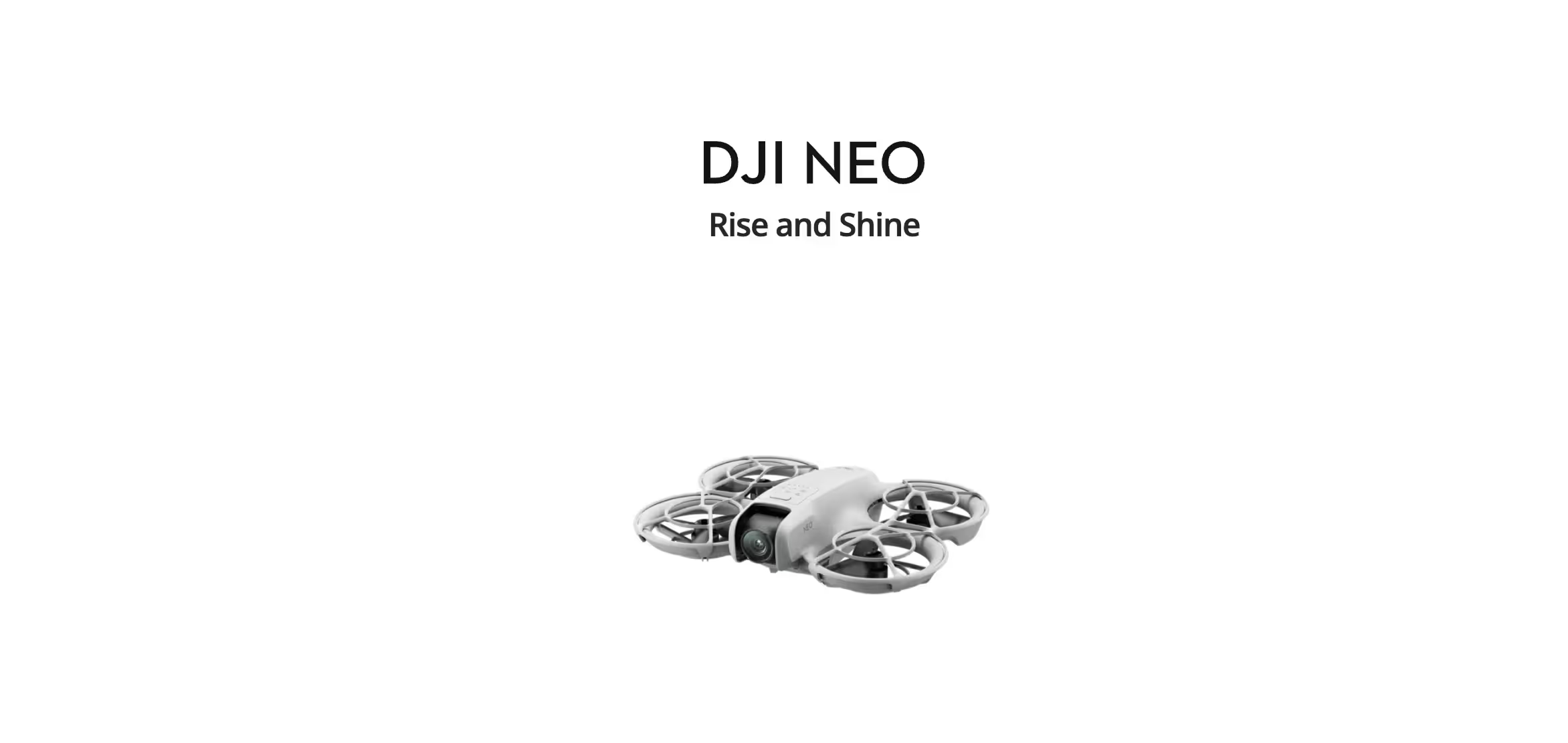
DJI Neo

Are you looking for a drone that is not only easy to use, but also shoots really cool videos and photos? Then you should take a closer look at the DJI Neo! It is perfect for beginners who want to take great pictures without much effort — and the best thing about it: It costs just 199 euros.