A2 drone license extension 2025

It was almost 5 years ago when the new EU drone driving license was introduced back then. And since this is always valid for 5 years, the first driving licenses expire on 01.01.2026. There is now new information from the LBA on renewing or refreshing the drone driving license. Regardless of whether it's an A1/A3 or A2 license, this topic concerns all drone pilots!

Like many other drone pilots, you've probably already asked yourself the following:

  • How do I renew my A2 remote pilot certificate?
  • What do I have to do when my A2 drone license expires?

The Federal Aviation Office (LBA) published an official circular on April 11, 2025, which is exactly about that — and we summarize the most important information for you, clearly and comprehensibly.

Technical details

  • Aircraft:

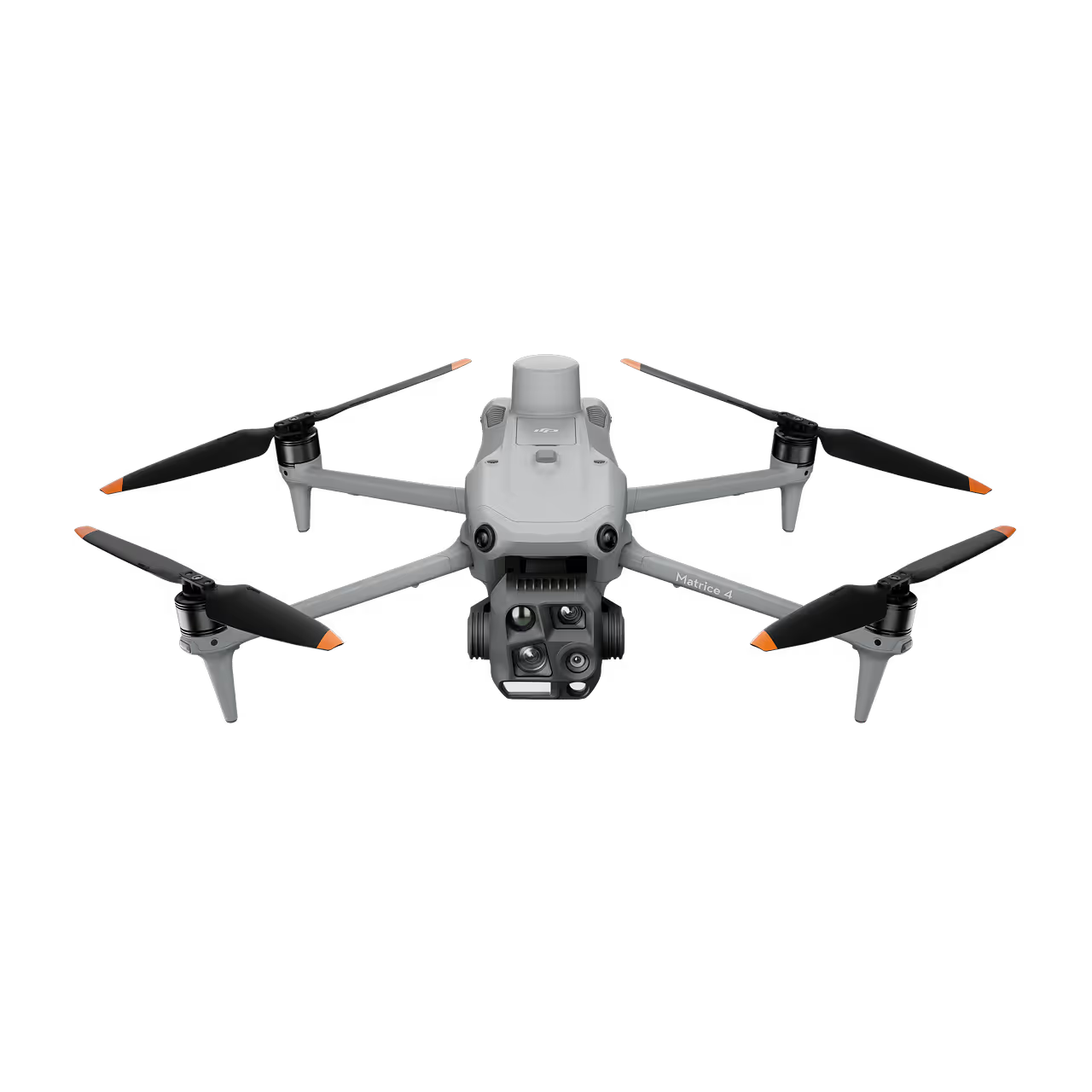
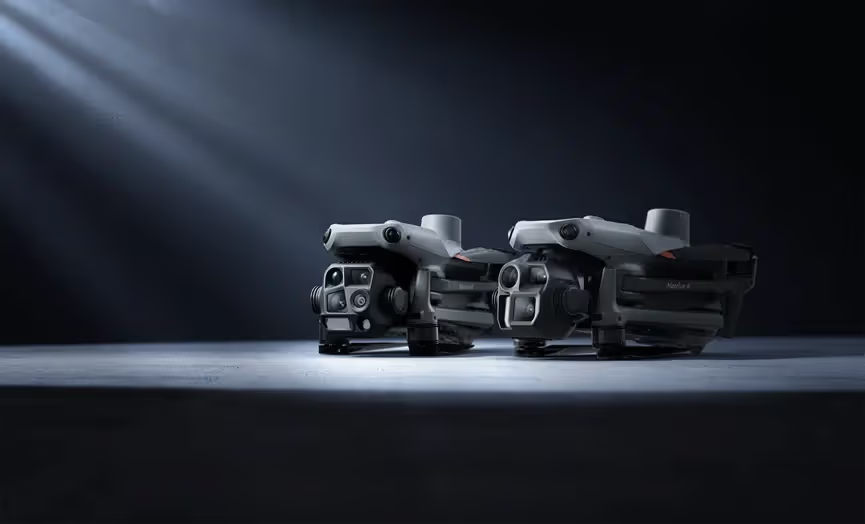
    DJI Matrice 4T / 4E

  • Starting weight:

    1219 g

  • dimensions:

    Gefaltet: 260,6 × 113,7 × 138,4 mm (L × B × H) Ausgefaltet: 307,0 × 387,5 × 149,5 mm (L × B × H)

  • Maximum climb rate:

    10 m/s 6 m/s (mit Zubehör)

  • Maximum descent rate:

    8 m/s 6 m/s (mit Zubehör)

  • Maximum horizontal speed:

    21 m/s vorwärts fliegend 18 m/s rückwärts fliegend 19 m/s seitwärts fliegend

  • Aircraft:

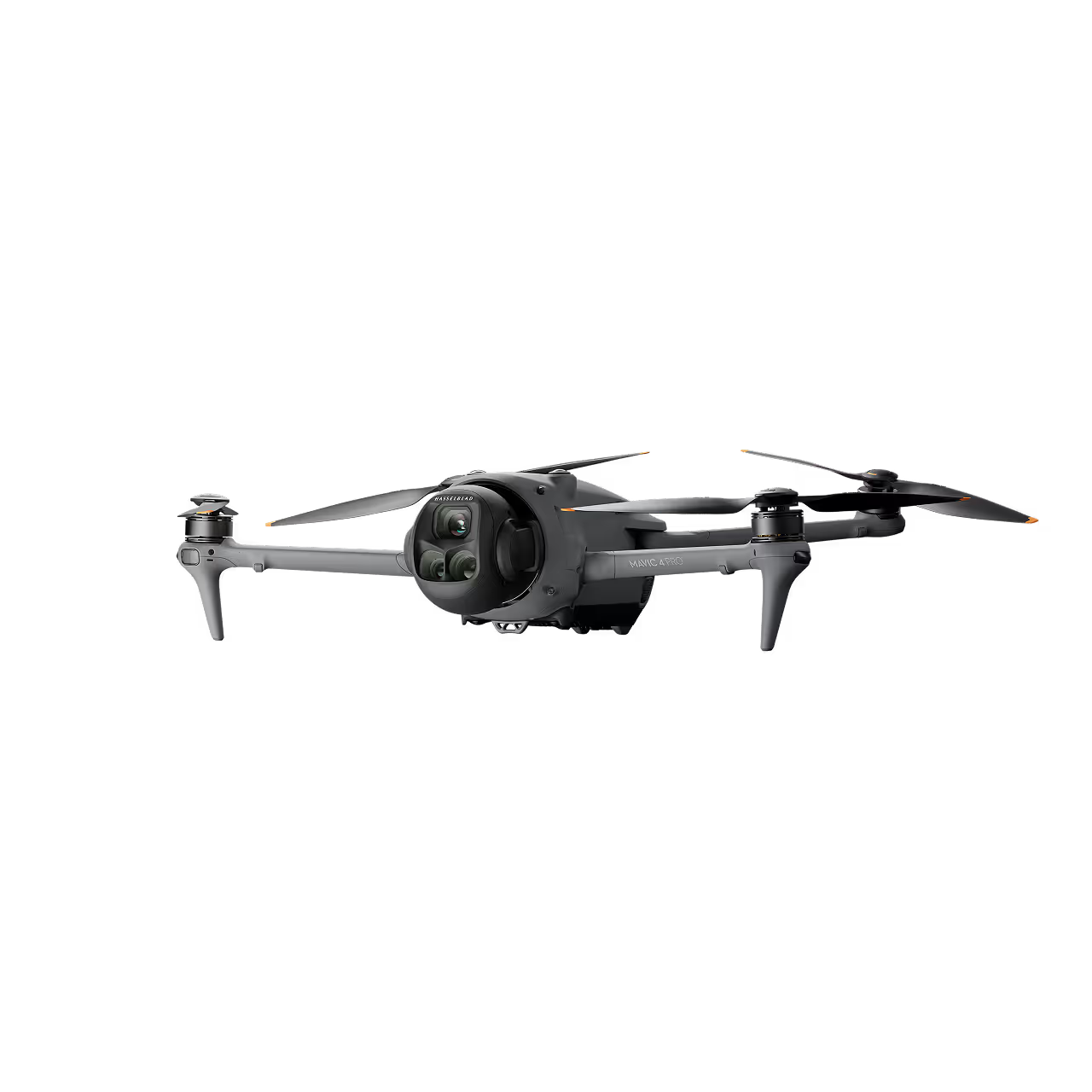
    DJI Mavic 4 Pro

  • Starting weight:

    1490g

  • dimensions:

  • Maximum climb rate:

  • Maximum descent rate:

  • Maximum horizontal speed:

  • Aircraft:

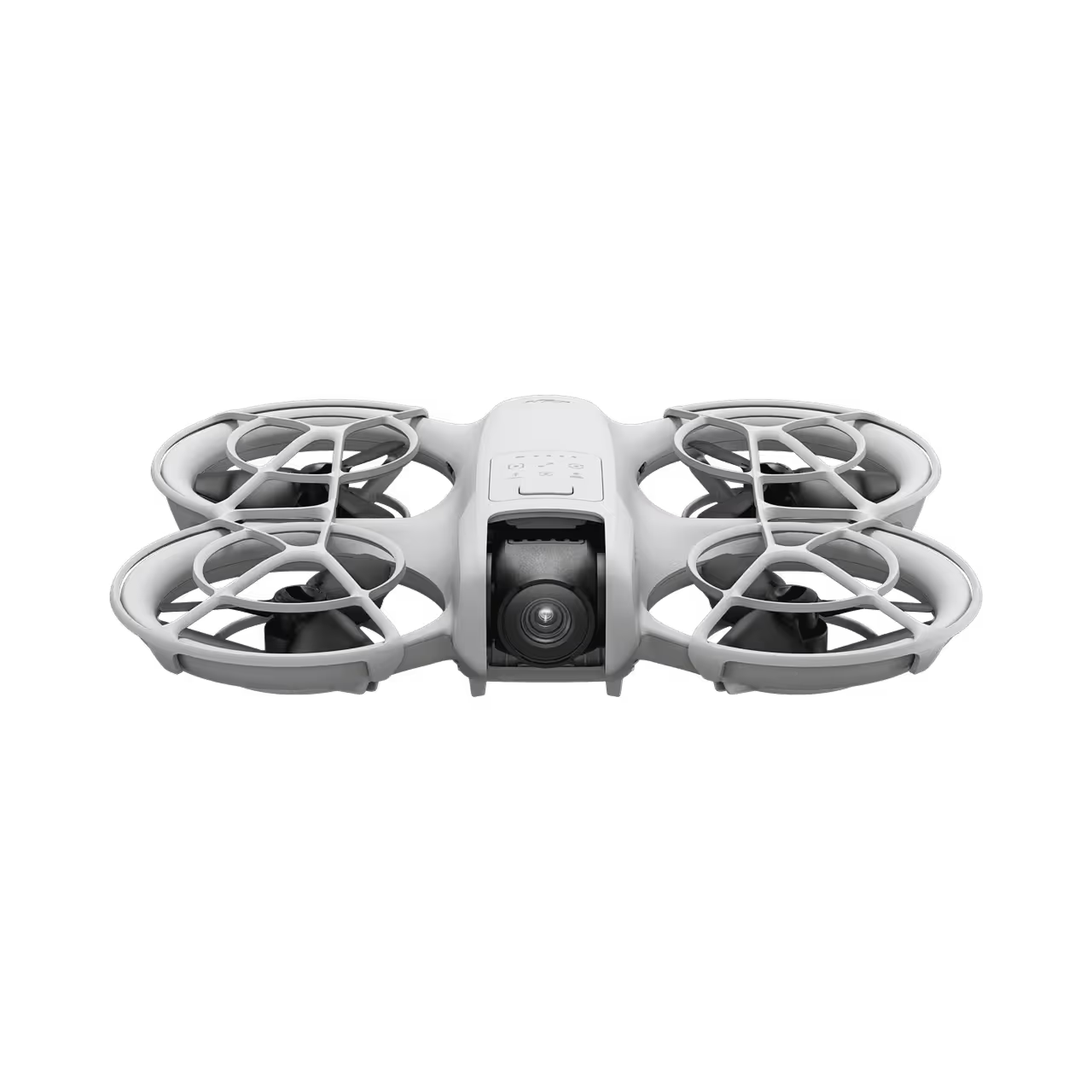
    DJI Neo

  • Starting weight:

    135 g

  • dimensions:

    130×157×48.5 mm (L×W×H)

  • Maximum climb rate:

    0.5 m/s (Cine mode) 2 m/s (Normal mode) 3 m/s (Sport mode)

  • Maximum descent rate:

    0.5 m/s (Cine mode) 2 m/s (Normal mode) 2 m/s (Sport mode)

  • Maximum horizontal speed:

    6 m/s (Normal mode) 8 m/s (Sport mode) 16 m/s (Manual mode)

Verlängern oder neu machen – was ist der Unterschied?

Wenn du ein gültiges A2-Zeugnis besitzt, kannst du es verlängern.

Ist dein Zertifikat bereits abgelaufen, musst du es komplett neu erwerben.

Das LBA unterscheidet dabei klar zwischen:

  • Verlängerung (Revalidation): Nur möglich, wenn dein A2-Zertifikat noch gültig ist.

  • Erneuerung (Renewal): Wenn dein Zertifikat bereits abgelaufen ist, musst du es komplett neu erwerben. Also eine neue komplette Prüfung machen.

Wichtig: Du musst immer nur den höchsten Drohnenführerschein verlängern. Wenn du z. B. A2 besitzt, brauchst du A1/A3 nicht separat verlängern.

Der Weg zur Verlängerung deines A2-Zeugnisses

Solange dein A2-Zeugnis noch gültig ist, hast du zwei Optionen, je nachdem für welches Paket Du dich bei uns entschieden hast:

  • Kostenlose Auffrischungsschulung, für alle, die bei uns in der lebenslangen Version eingeschrieben sind. Du findest dann zu gegebener Zeit einen neuen Kurs in deiner Übersicht. Die Schulung machst Du dann in Eigenregie und beantwortest zwischendurch ein paar Fragen. Wenn Du alles bearbeitet hast, schicken wir Dir die Unterlagen zur Verlängerung, welche Du wie gewohnt digital signierst. Im Anschluss bekommst Du deinen verlängerten Drohnenführerschein direkt vom LBA via E-Mail zugeschickt.

  • Kostenpflichtige Auffrischungsschulung, für alle, die sich für die 1 Jahres-Version entschieden haben. Nach der Bezahlung wirst Du direkt für die Auffrischungsschulung freigeschaltet und kannst direkt loslegen. Der Ablauf ist dann der gleiche wie in Punkt 1 beschrieben.

Falls Du dich innerhalb des 1-Jahres Zeitraumes für ein Upgrade auf die lebenslange Version entscheidest, zahlst Du das gleiche, wie jemand, der sich direkt für die lebenslange Version entschieden hat. Und die Auffrischungsschulung ist dann schon mit drin… ein Leben lang! Entscheidest Du dich später, wird die Auffrischungsschulung teurer sein.
Am besten meldest Du dich direkt bei uns via Chat für dein Upgrade.

Beide Optionen führen zur Verlängerung – aber nur solange dein A2 gültig ist!

Wenn dein A2-Zertifikat schon abgelaufen ist, kannst du keinen Auffrischungskurs mehr machen, sondern musst komplett neu starten. Wie das geht, erklären wir Dir jetzt.

Drohnenführerschein abgelaufen. Was dann?

Sobald dein Drohnenführerschein nicht mehr gültig ist, musst Du leider die komplette Prüfung erneut, wie beim ersten Mal, ablegen.

Dies können wir auf Grund des höheren Aufwands (Prüfer etc. pp) leider nicht mehr kostenlos anbieten. Auch hier wird es 2 Optionen geben, je nachdem in welchem Paket Du eingeschrieben bist.

  • Lebenslange Version: Du bekommst die erneute Prüfung sehr sehr günstig. Wir werden versuchen Sie zum Selbstkostenpreis anzubieten. Da aber noch nicht alle Details zum jetzigen Zeitpunkt (Anfang April 2025) bekannt sind, können wir noch keinen konkreten Preis nennen.

  • 1-Jahres-Version: Du bekommst die erneute Prüfung zum regulären Preis. Wieviel das sein wird, können wir noch nicht sagen. Klar ist aber, dass es teurer sein wird, als wenn Du dich direkt für die lebenslange Version entschieden hättest.

Du siehst also, dass es auf jeden Fall Sinn macht, den Drohnenführerschein schon vor dem Ablaufdatum zu verlängern. Wenn Du einen automatischen Reminder haben willst, kannst Du dich hier direkt dafür eintragen.

Wann geht’s los?

Die Umsetzung der neuen Regelung wird gerade vorbereitet.

Die Wiederholungsprüfung ist bereits jetzt möglich – und sobald die Auffrischungskurse offiziell freigegeben sind, informieren wir dich sofort.

Jetzt kannst Du erstmal, bis es soweit ist, „locker durch die Hose atmen“…

Bleib auf dem Laufenden!

Sobald es vom LBA neue offizielle Informationen zur A2-Verlängerung oder zu den Schulungsinhalten gibt, erhältst du von uns eine E-Mail.

Thank you! Your submission has been received!
Oops! Something went wrong while submitting the form.

... folge uns bei Social Media!

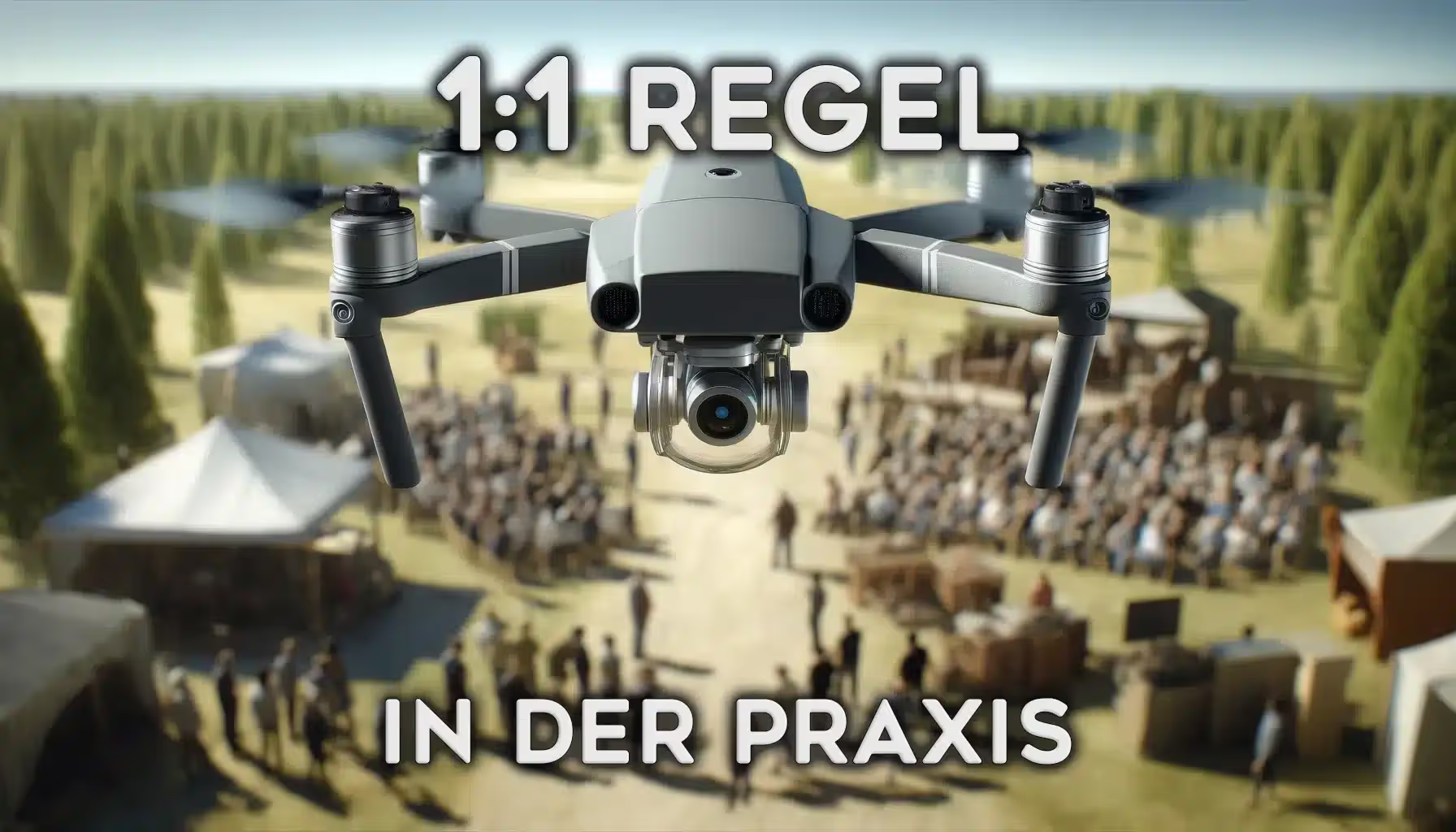
The 1:1 rule

Well, it's really easy. The 1:1 rule states that the drone's flight altitude must not be greater than the distance from uninvolved persons. This means that if you fly 50 m high, you must also maintain a minimum distance of 50 m from the uninvolved persons. If you only fly 20 m high, a distance of... 20 m, that's right. 😉

Well, you see, it's really easy.

But also equally important, because the 1:1 rule is used for the so-called soil risk, In other words, to minimize the risk that your drone poses to objects on the ground.

How does that work?

Imagine the following scenario: You're flying through the area with your drone and suddenly a motor fails. With most drones, this means that the drone will definitely crash.

But now the drone will not fall vertically like a rock to the ground in place, but because it still has a certain horizontal speed, it will travel a certain distance until it hits the ground. This route depends primarily on the altitude, the mass of the drone and, of course, your speed.

Here is an example of a drone that flies at an altitude of 50 m at a speed of 5 m/s and weighs 900 g (like most Mavics):
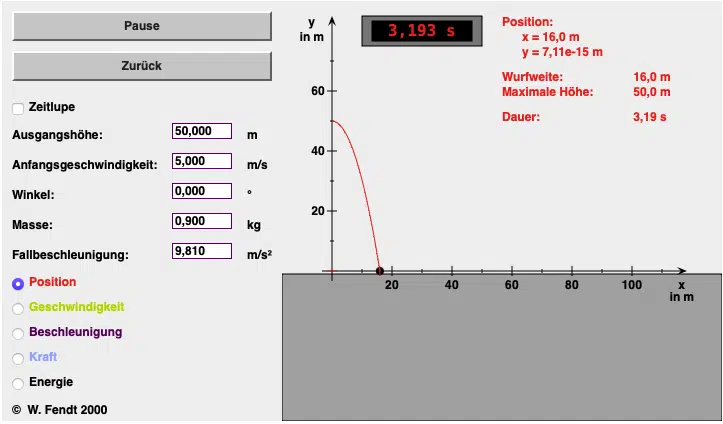
Simulation Flugbahn einer Drohne

Simulation by Walter Fendt.

Here you can see that the distance traveled after the engine failure is still 16m and it takes about 3s until the drone hits.

By complying with the 1:1 rule, we therefore still have enough safety buffers left over here so as not to endanger uninvolved persons. More specifically, it is 50m - 16m = 34m.

If you repeat the experiment at the maximum speed of 21 m/s, the buffer becomes significantly smaller or is no longer available at all. The distance traveled after engine failure is then 67m! 😳

For example, this is one reason why you have to activate slow flight mode (max. 3 m/s) in the A2 category as soon as you fly closer than 30 m to uninvolved people.

Well, now you know what the 1:1 rule is and why they introduced it.

But now back to the actual topic.
How can I put the 1:1 rule into practice?

We use very simple trigonometric relationships. Put more simply: simple principles of triangles 😉 and a feature that most drones with cameras have out of the box.

And because I don't want to burden you with mathematical formulas now, I'll explain to you directly how it works in practice:

If you want to check whether you are following the 1:1 rule, you can do the following:

  • Align your camera so that you have the innocent person or other critical infrastructure in the picture.

  • Swivel your camera down to a 45° angle.

  • Check whether the person is in the top or bottom half of the screen

    • Top half: ✅ All good, you comply with the 1:1 rule

    • lower half: 🚫 You must immediately reduce your height or increase the distance

It's as simple as that, but I can already see that you might have a small question mark in your head. Especially on the 2nd point, I think. Where do you get the camera's angle of inclination? So here are a few additional words about this.

With most DJI drones, you'll see a small scale on the screen on the right side.

This is usually quite transparent as long as you don't pan the camera up or down, but becomes opaque as soon as you pan the camera.

On this scale, you can read the camera angle very well. With some models, you even have markers for the 45° position.

You usually adjust the angle of DJI drones using a small wheel on the remote control.

Okay, if you're not interested in why this is the case, then you should skip the next section and Read more here.

The math background

As mentioned above, simple trigonometric relationships are the reason why you can do this so easily.

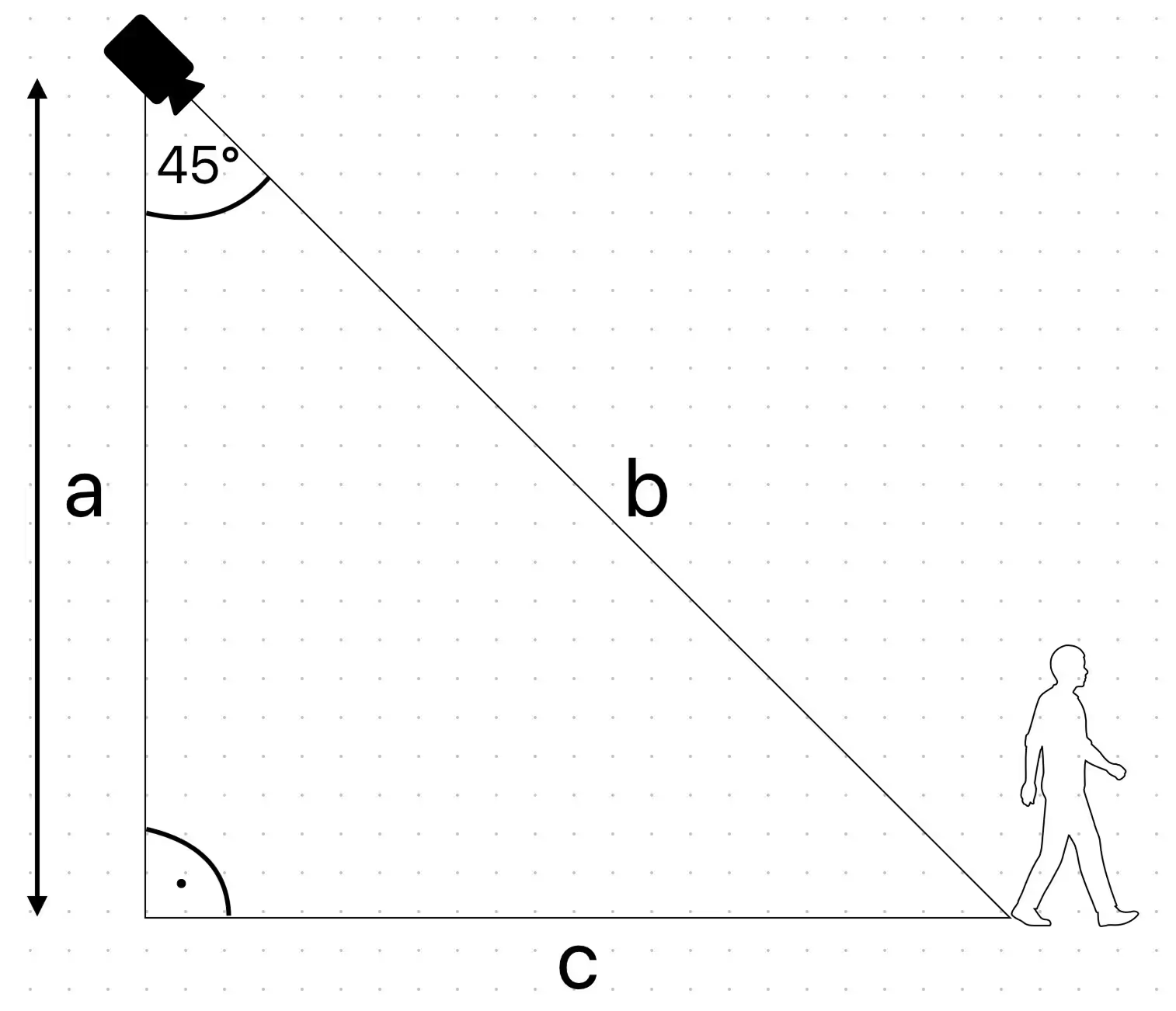
Perhaps you still know from math lessons at school that the sum of all angles in a triangle must be 180°. In our example, we now also have the special feature that it is a right, isosceles triangle:

Side a is also the height of the drone. The camera shown is tilted downwards at a 45° angle. Side c is the horizontal distance between the drone and the uninvolved person. The right angle is between sides a and c.

How does that work?

Imagine the following scenario: You're flying through the area with your drone and suddenly a motor fails. With most drones, this means that the drone will definitely crash.

In this right triangle, a = c applies, i.e. The height of the drone above ground is equal to the distance from the uninvolved person.

Rechtwinkliges Dreieck mit den Seiten a, b und c, einem 45-Grad-Winkel und einer Kamera in der linken oberen Ecke, rechts geht eine Person.

Equation—Copteruni-1-1 rule.

Of course, you can only do this on flat terrain. If the whole thing happens in descending or ascending terrain, it is no longer as accurate.

If you not only sleep in the forest and have a bushy tail, but are also a fox, you may have noticed another useful use case...

How to measure distances with a drone

Of course, you can also use this insight to measure distances with your drone. There are 2 ways to do this:

  1. possibility

    • Bring the object to which you want to measure the distance into your image section

    • Swivel your camera 45° down

    • Rise or fall until the object is in the center of the image

    • Read your current altitude. That is also the distance to the object ✅

  2. possibility

    • Bring the object to which you want to measure the distance in the center of the image

    • Read your current camera angle and height

    • Use our calculator or PocketCard to determine the current distance.

🟢 1:1 rule met

🔴 1:1 rule not fulfilled!
You have to adjust your flight altitude by xxx reduce.

Note:Enter at least two of the three values. The missing value is calculated automatically.

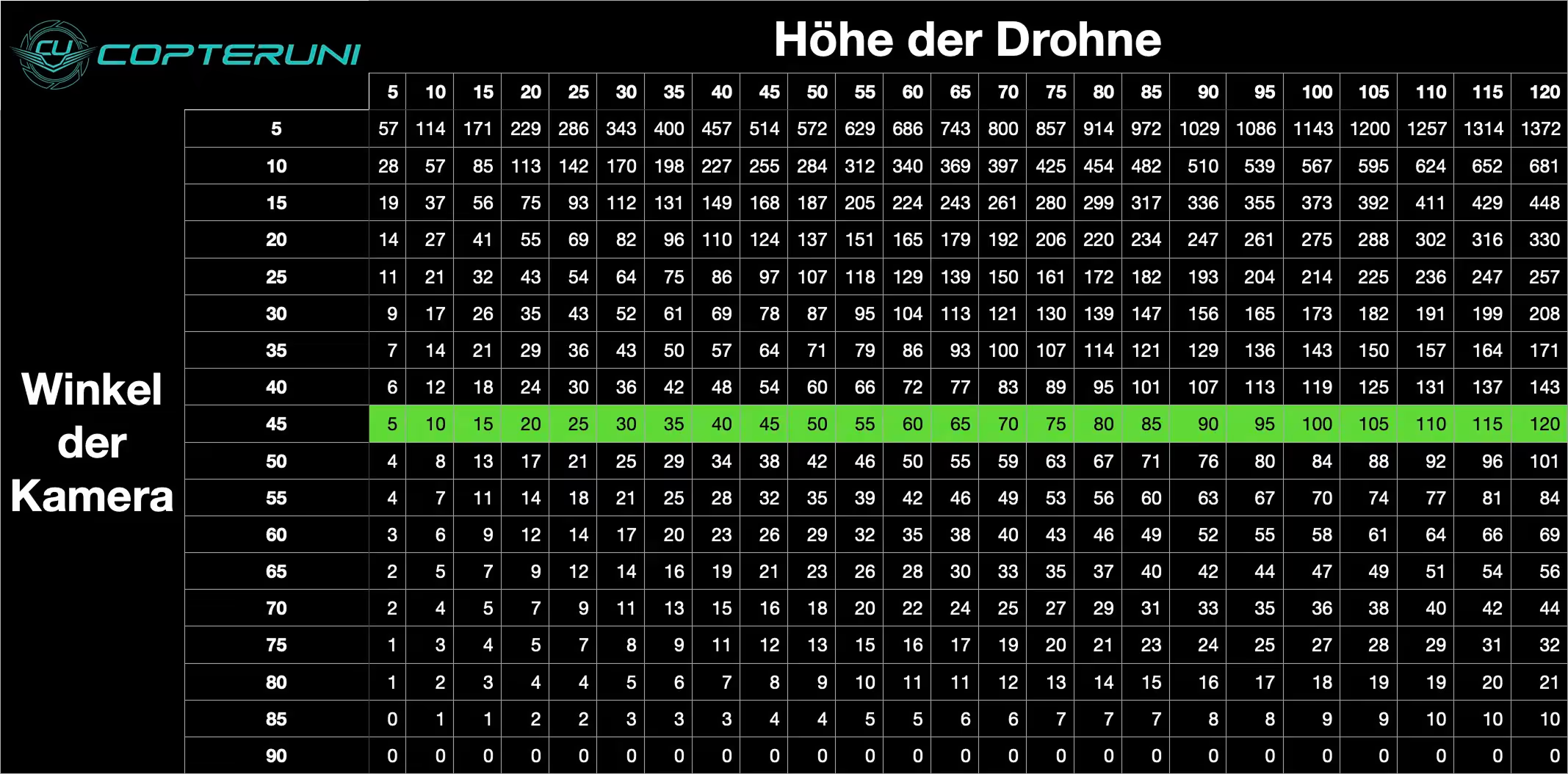
1 zu 1 Regel in einer Tabelle

1-1 rule-Copteruni

By the way, you use the PocketCard as follows:

  • Read the camera's angle of inclination and enter the 1st column with this value

  • Then look at the top of the first line and go as far to the right until you find your current height.

  • The intersection of the Tilt Angle line and the Height column is your distance from the object.

To make it more clear, here's a small example:

I am currently flying at an altitude of 70 m with my drone and my camera is tilted at 20°. If the object is now in the center of the image, I have a distance of approx. 192m from the object.

Great, isn't it?

conclusion

With these simple tips, you now know how to easily comply with the 1:1 rule without the great uncertainty of guessing. At the same time, I also showed you how you can measure distances relatively precisely with your drone.

The PocketCard helps you measure the distance to something from almost any position.

I recommend that you try the whole thing out for yourself while flying for real. Deliberately fly at different distances such as 30m, 10m, or even 5m from yourself. And you'll find that you can fly really close to innocent people in compliance with the rules.

I hope I was able to offer you real added value with this newsletter.

I would be very happy to receive your feedback and of course you can discuss this topic extensively with us on the Copteruni Campus.

Attention drone pilots! These guidelines are helpful tips based on experience, but they are not legally binding. They do not replace official drone laws, nor do they replace the existing geozones, where much is already regulated. They only serve to make it easier for us to fly and to help us fly more safely.

The solution - a distinction is made according to the infrastructure

First of all, EASA has specified that people who are not protected by vehicle covers must be seen as uninvolved third parties and that the known distances and rules therefore apply.

As a result, people within a closed vehicle cannot be seen as uninvolved third parties 👍🏻.

However, in order not to have to look at which types of vehicles are now on the road every time, EASA recommends differentiating according to the infrastructure. Namely to motorways (translated, original: highways) and other roads.

Furthermore, a distinction is made within these two sectors according to the operating category, i.e. between A 1, A 2 and A 3.

And now to the specific recommendations for motorways and other roads.

Motorways - you should keep that in mind

Here is a nice table with which you can see what applies in the respective operating category.

Motorways - you should keep that in mind

terms

A1

A2

A3

Overflight allowed?

🟢🟢🔴

Hovering (floating) allowed?

🔴🔴

Longer flights over or along the infrastructure?

🔴🔴

20m minimum height

🟢🟢

Unrestricted view of the drone at all times

🟢🟢

Drivers are not distracted by banners, flashy lights, etc.

🟢🟢

No vehicles available during the overflight

🔴🟢

🟢 = yes, or must be considered 🔴 = no, or must be ignored

note: In A3, you can't do that at all.

That applies to other roads

Here, too, we have put together a nice table for you.

That applies to other roads

terms

A1

A2

A3

Overflight allowed?

🟢🟢🟢

Hovering (floating) allowed?

🔴🔴🔴

Longer flights over or along the infrastructure?

🔴🔴🔴

20m minimum height

🟢🟢🟢

Unrestricted view of the drone at all times

🟢🟢🟢

Drivers are not distracted by banners, flashy lights, etc.

🟢🟢🟢

No vehicles available during the overflight

🟢🟢🟢

🟢 = yes, or must be considered 🔴 = no, or must be ignored

You can immediately see that there is much more to other roads, especially in the A3 category. However, there must never be uninvolved persons in vehicles nearby during the crossing.

Conclusion and an important note ⚠️

In principle, of course, you must never disturb or endanger traffic with your drone. If you operate nearby, the 1:1 rule also applies. Always watch out for innocent people in vehicles.

With these recommendations, EASA has created a nice guideline which, on the one hand, reduces the risk of a corresponding mission and at the same time also provides clear recommendations for action.

It is now up to countries to consider it within the framework of geozones.

⚠️ We have already introduced corresponding geozones in Germany. In [§21h LuftVO] It's called so nicely:

(3) Operation in the following geographical areas is permitted under the following conditions...

5. over and within a lateral distance of 100 meters from federal highways, federal waterways and railways,

a) if, in the event of an overflight of federal trunk roads or railway facilities, the operation takes place in the “special” category and the particular risks of overflying federal trunk roads or railway facilities have been sufficiently taken into account within the risk assessment in accordance with Article 11 of Implementing Regulation (EU) 2019/947,

b) if the competent authority or the operator of the facilities has expressly agreed to operate the unmanned aerial vehicle,

c) when the height of the aircraft above ground is always less than the lateral distance from the infrastructure and the lateral distance from the infrastructure is always greater than 10 meters, or

d) If, in the event of an overflight of federal waterways, the aircraft is operated at least 100 meters above ground or water, only one crossing takes the shortest route and no ships or shipping facilities, in particular locks, weirs, ship lifts and berths, are flown over

In this country, it is already clearly regulated how to Federal highways has to behave. Other roads are not yet so clearly regulated, so we recommend that you follow the good airmanship guidelines described here.

What do you think of these guidelines? Will you stick to them or do you think they are complete nonsense?

Let us know and discuss with us and other drone pilots in our exclusive forum, the Copteruni Campus

Über den Autor: Jan Evers

Jan Evers is an outstanding personal coach in the online course sector and a recognized expert in his field. With a Master of Science in Electrical Engineering, he has extensive technical knowledge. In the last 10 years, Jan has not only designed and programmed drones, but has also successfully used them in major film productions such as “Deutschland von Oben” and various Tatort episodes. As an active airline pilot, he also brings valuable professional aviation expertise. His experience as an instructor for airline pilots at a renowned flight school particularly qualifies him to convey learning content effectively and comprehensibly. Jan Evers combines a passion for drones and aviation, which makes him an excellent coach and mentor.

Any more questions?

Give us a call

Write us an email

Chat öffnen

Use our chat

Blog

Which drone license do I need for the DJI Matrice 4T/4E?

If you want to fly the DJI Matrice 4T or 4E, you've probably already come across the new C2 certification. It provides clear guidelines as to which drone driver's license you need in order to be able to use these drones safely and legally. The answer is simple: Without the A2 drone license, you won't be able to exploit the full potential of these drones.

1:1 rule in practice

I'm sure you feel the same as many other drone pilots:

You know the 1:1 rule, but you don't know exactly how to implement it correctly in practice.

Because how are you supposed to constantly measure the distance from the drone to an uninvolved person or critical infrastructure if you don't have a very expensive drone with a laser rangefinder?

The good news is: it's pretty easy with almost any drone!

But one thing at a time. I would first like to explain to you exactly what the 1:1 rule means again:

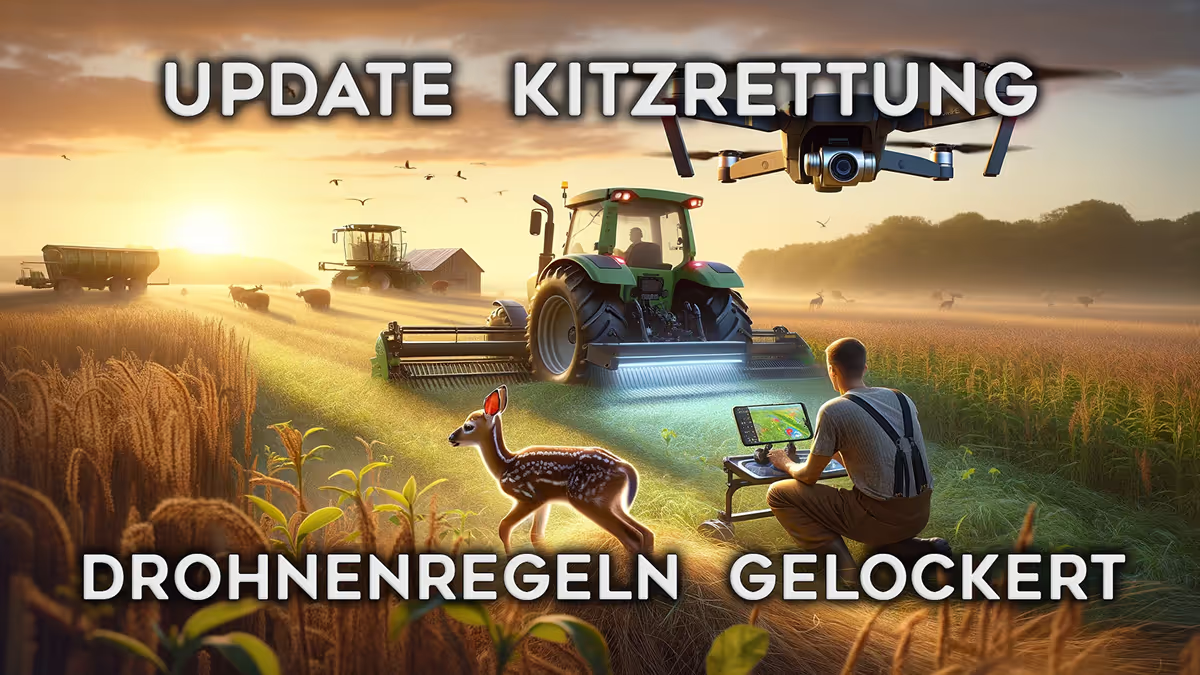
Revolution in der Kitzrettung Drohnenregeln gelockert

Vielleicht hast Du ja schon mitbekommen, dass vor allem ein Thema seit dem Ende der Übergangsregelungen vermehrt in der Rehkitzrettungs-Community heiß diskutiert wird:

Wie kann ich meine Bestandsdrohne auch in einem Abstand von 150m zu Wohngebieten weiterhin für die Kitzrettung nutzen?

Dank des unermüdlichen Einsatzes einiger weniger, vor allem auch Hans Würger, Jürgen Luttmann, Harald Weiner hat das Bundesministerium für Digitales und Verkehr nun folgende Entscheidung getroffen:

Die EU-Drohnenregeln werden für Anwendungen in der Landwirtschaft teilweise ausgesetzt.

Unter anderem ist folgendes neu:

  • Reduzierung des Mindestabstands zu bebauten Gebieten von 150m auf 10m
  • unter gleichzeitiger Einhaltung der 1:1 Regel

Die 1:1 Regel gibt an wie hoch du bei einem gewissen Abstand zu unbeteiligten Personen fliegen darfst. Bist du beispielsweise 50 m hoch musst du auch einen Mindestabstand von 50 m zu unbeteiligten Personen einhalten. Bist du 25 m hoch musst du einen Mindestabstand von 25 m einhalten. Würdest du in einem Abstand von 25 m auf 30 m aufsteigen wollen, musst du auch gleichzeitig den Abstand erhöhen. Man kann die eins zu eins Regel auch mit den Worten: Höhe gleich Mindestabstand zusammenfassen.

Somit schafft es das BMDV rechtzeitig vor Beginn der Kitzretter-Saison eine Lösung zu präsentieren.

Was hältst Du davon?

Diskutiere es mit uns im Copteruni Campus, dort sind auch Hans, Jürgen und Harald der Jägerschaft Verden vertreten und können mitdiskutieren.

Hier findest du alle Informationen des LBA.

Drohnen und Natur - Ein Leitfaden für Drohnenpiloten

Liebe Drohnenpilotin,

lieber Drohnenpilot,deine Leidenschaft für das Fliegen öffnet dir die Türen zu einer Welt aus einzigartigen Perspektiven und unvergleichlichen Aufnahmen der Natur. Doch mit dieser Freiheit geht auch eine große Verantwortung einher – die Verantwortung, unsere natürlichen Lebensräume zu schützen und zu bewahren. In diesem Blogartikel möchte ich dich dazu ermutigen, deinen Horizont zu erweitern und die Auswirkungen deiner Drohnenflüge auf die Umwelt zu verstehen. Lass uns gemeinsam erkunden, wie du mit deiner Drohne die Schönheit der Natur einfangen kannst, ohne sie zu stören.

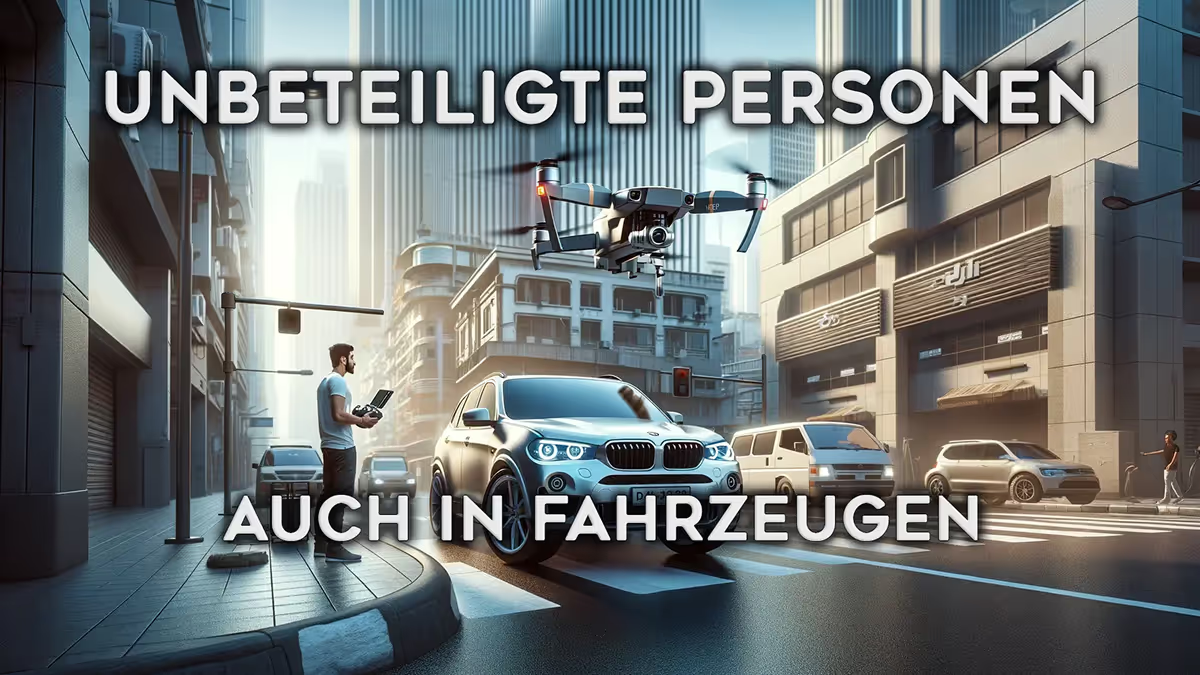
Uninvolved persons - even in vehicles

The problem

So far, EASA rules have not stated anything specific to reduce the risk posed by drones to vehicles on the ground. In A1/A3 training, the Federal Aviation Office taught that people in vehicles can also be seen as uninvolved third parties. The effects of this view on practice became apparent quickly and were often discussed controversial in forums, etc.: you could barely fly professionally near roads if you saw it very closely. That is why EASA - Best Practices have now been published by EASA - which are intended to provide pilots with a guide to the To lend a hand on how they will deal with such situations in the future should.